Light table geometry
Translucent tiles on a lit surface help children compare color mixing, symmetry, and overlapping shapes while keeping the setup quiet and visual.
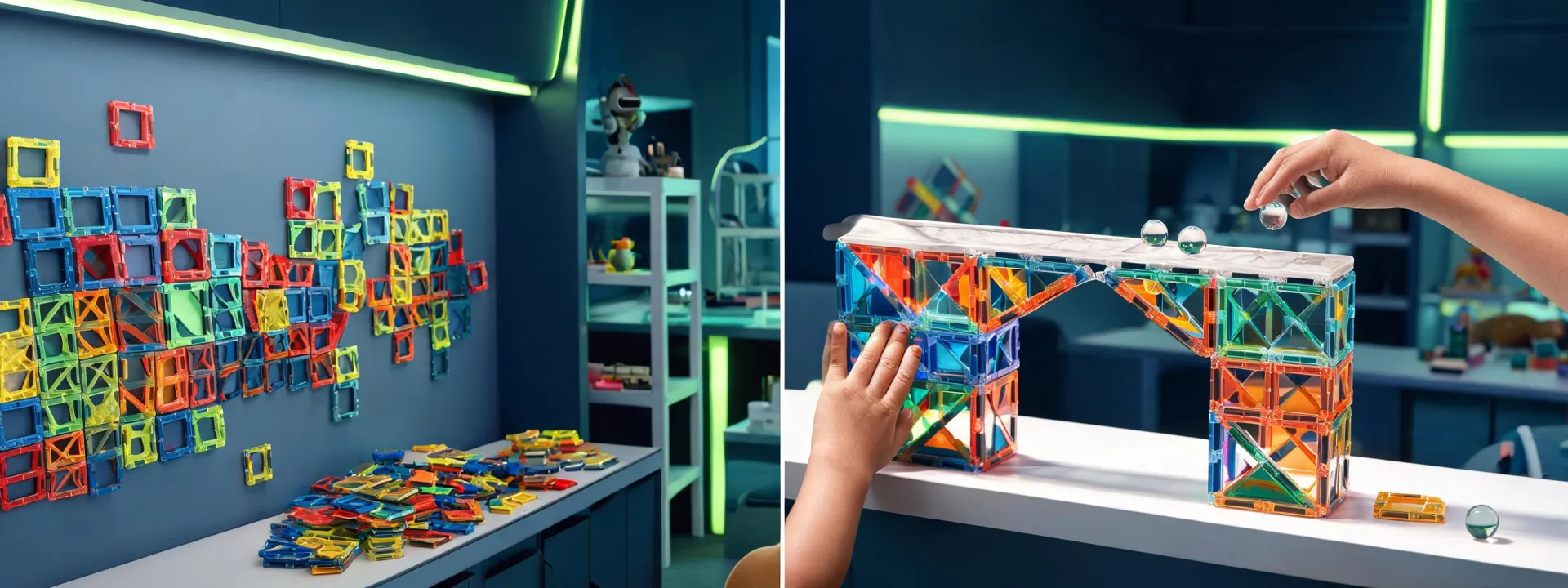
The lab explores how magnets, geometry, balance, color, and modular parts can help children move from free building to early engineering habits. The structure comes from the requested comparison layout, but the story is fully about magnetic construction, not environmental reporting.
Instead of a savings calculator, this lab format helps teams think through play complexity. The same magnetic tile set can support a three-minute color sort, a ten-minute tower test, or a longer bridge challenge. The right activity depends on age, piece count, surface space, and whether the goal is storytelling, geometry, motion, or teamwork.
A strong STEM toy does not need to lecture a child. It should make a question visible: Which wall is stronger? Which ramp sends the ball farther? How many triangles make the roof stable? The calculator-style layout below translates those questions into practical planning cues.
Recommended prompt: build a bridge wide enough for a vehicle, then revise it so a ball can pass below.
Translucent tiles on a lit surface help children compare color mixing, symmetry, and overlapping shapes while keeping the setup quiet and visual.
Track pieces, wheels, and towers create repeatable experiments around slope, speed, height, and the joy of trying again after a collapse.
Windows, doors, signs, and figures support narrative play, encouraging children to explain who lives in the build and why the structure changes.
Small teams receive shared constraints such as limited shapes, one tall tower, or a bridge span, turning play into collaboration without making it feel formal.
Share the age range, setting, and kind of play you want to encourage. We will help frame a product and activity direction that makes the first click matter.